

The number of fireworks being lit off at night is out of control this year.
While people often light off fireworks close to the Fourth of July, this year fireworks have been lit in large numbers starting weeks earlier. New York City had a 4,000% increase in fireworks complaints in the first two weeks of June compared with last year. This prompted Mayor Bill de Blasio to vow a crackdown on illegal fireworks.
Complaints about fireworks are not confined to just New York City, but in cities across the country like San Francisco, Denver, Harrisburg, Albuquerque, Providence and many other places…
Brain and Behavior
 sb admin | March 30, 2020
Social distancing due to the SARS-CoV-2 virus and the threat of COVID-19 has meant online communication is more popular than ever, with even casual parenting groups discovering the previous enterprise video conferencing tool Zoom.
But how will that affect communications? Have you ever met someone who is stiff in person but great on camera or the other way around? Neuroscientists study brain and behavior and in a recent study found that a person's gaze is altered during tele-communication if they think that the person on the other end of the conversation can see them.
People are very…
 sb admin | February 7, 2020
Almost 2 million Americans have age-related macular degeneration (AMD), where the cells in the retina, which is the layer of tissue in the back of the eye, break down, causing central vision to become blurry. Over time, 100,000 of those will become blind.
An international team of scientists has identified a protein, FHR4, which is strongly linked to AMD when its levels are raised in the blood. The findings were confirmed in 484 patient and 522 control samples from two independent collections across Europe. FHR4 is one of a group of proteins that regulate the complement system and the genes…
 hank_campbell | April 3, 2019
Researchers 35 years and younger, the annual Eppendorf &Science Prize for Neurobiology, which is awarded for contributions to neurobiological research based on methods of molecular and cell biology, is now open for entries.
Applying requires a 1,000-word essay and tell the prize committee about your work.
The prize is $25,000 plus Science magazine will publish an essay about your work. You'll have travel paid to the Prize Ceremony held in conjunction with the Annual Meeting of the Society for Neuroscience in the USA and AAAS throws in a 10-year AAAS membership (but only a digital…
 dr. dolittle | October 17, 2017
In looking back over the history of the blog, I thought it would be fun to take another glimpse at the top 5 most popular posts in 2017 thus far...
Image of lavender from GFDL 1.2, https://commons.wikimedia.org/w/index.php?curid=322384
While lavender aromatherapy has been documented to reduce stress in humans, little is known about its potential for reducing stress in veterinary medicine. Horses can develop elevated heart rates and stress hormone levels when they are confined to horse trailers and transported to new competition venues. Therapies to reduce stress in competition…

 gregladen | October 4, 2017
Two science books cheap (Kindle version, two bucks):
The Male Brain: A Breakthrough Understanding of How Men and Boys Think
Dr. Louann Brizendine, the founder of the first clinic in the country to study gender differences in brain, behavior, and hormones, turns her attention to the male brain, showing how, through every phase of life, the "male reality" is fundamentally different from the female one. Exploring the latest breakthroughs in male psychology and neurology with her trademark accessibility and candor, she reveals that the male brain:
-is a lean, mean, problem-solving machine. Faced…
dr. dolittle | September 28, 2017 Sara Letzner had humans compete against pigeons in a behavioural experiment. Photo from: Ruhr-Universitat at Bochum
A new study conducted by Drs. Sara Letzner and Onur Gunturkun (Ruhr-Universitat at Bochum) as well as Dr. Christian Beste (Technische Univeritat at Dresden) shows that pigeons are better than humans when it comes to multitasking. Their findings were published in Current Biology.
The findings from the study show that the mammalian cerebral cortex, with all of its cortical layers, is not the only type of brain that can perform complex tasks as birds do not have a…

 oracknows | September 27, 2017
Last week, an antivaxer "challenged" me to look over a paper purporting to show that aluminum adjuvants in vaccines cause inflammation of the brain and therefore contribute to autism, a paper that she would be "citing frequently." Being someone who lives by the motto, "be careful what you wish for," I looked it over in detail. Not surprisingly, my conclusion was that the experiments were poorly done using obsolete and not very quantitative methodology and that the results do not support the conclusions made by the authors. I was not alone in this conclusion. Skeptical Raptor was, if anything…
 oracknows | September 21, 2017
"Why, oh, why do I have to die in the cause of such crappy science?"
For antivaxers, aluminum is the new mercury.
Let me explain, for the benefit of those not familiar with the antivaccine movement. For antivaxers, it is, first and foremost, always about the vaccines. Always. Whatever the chronic health issue in children, vaccines must have done it. Autism? It’s the vaccines. Sudden infant death syndrome? Vaccines, of course. Autoimmune diseases? Obviously it must be the vaccines causing it. Obesity, diabetes, ADHD? Come on, you know the answer!
Because antivaxers will never let go of…
 esiegel | August 19, 2017
“It will shine still brighter when night is about you. May it be a light to you in dark places, when all other lights go out.” ―Galadriel, LOTR, J.R.R. Tolkien
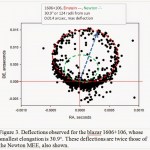
The scientific stories we've covered this week have been out-of-this-world here at Starts With A Bang! But the greatest show is still to come. Right now, I'm on my way down to the path of totality in Oregon, along with millions of others hoping to catch a glimpse and enjoy the experience of a sight unlike any others on Earth. When the sunlight goes completely out, some truly wonderful things will be revealed, and I hope to see them all…
 gregladen | July 25, 2017
If you give your children over to the Boy Scouts for a day or two, they may do something to them akin to abuse. This happened.
The Boy Scouts knew what they were getting into when they invited Donald Trump to speak at their national event. They even posted warnings for the troop leaders and scouts, on their blog.
As a unit leader or staff member, you can help make the president’s visit a success by ensuring that any reactions to the president’s address are, as we state in our Scout Law, friendly, courteous, and kind. This includes understanding that chants of certain phrases heard during the…
 oracknows | July 10, 2017
I've been writing about antivaccine loons for a long time, and during that time I've seen them propose some crazy ideas. The other day, I came across one proposing what might well be the craziest, most irresponsible idea I've ever seen from an antivaccine activist. It comes from our old friend Kent Heckenlively. Heckenlively, as you might recall, started out over at the antivaccine crank blog Age of Autism but, for whatever reason, left the blog to write somewhere else. Amazingly, that "somewhere else" turned out to be the website of one Patrick "Tim" Bolen, whom I just mentioned yesterday…
 oracknows | July 3, 2017
One of the most persistent narratives latched on to by advocates of "integrative medicine" is that the "mind" can somehow "heal" the body. Sometimes, the claim is that such interventions work through "powerful placebo" effects. Sometimes it involves the abuse of emerging science, such overblown claims about what can be accomplished through epigenetic modifications of DNA and gene expression. While my wife and I were away on vacation last month, there was another example of this claim popping up in the media under headlines like these:
Mindfulness and meditation dampen down inflammation genes…
 oracknows | June 27, 2017
I know that a lot of you like John Oliver and watch Last Week Tonight with John Oliver , and I do too. In particular, I love how he devotes 20 minute segments of his show to intelligent long form comedy about all sorts of issues, including scientific and medical issues, including issues that I never would have thought I was interested in. Indeed, there are lots of times when he covers news stories better than the news media. So when he did a segment on vaccines last night—and a segment that was longer than his usual major segments—you know I would be incredibly interested. Here's a video of…
dr. dolittle | June 20, 2017 Photo of a kea by Mark Whatmough - Milford Sound, Key Summit, The Divide, Queenstown, CC BY 2.0, via Wikimedia Commons
Most of us have heard the phrase: Laughter is contagious. When we hear other people laughing, we often smile even if we have no idea why they are laughing. Dr. Sophie Scott from the University College of London and her colleagues played both positive sounds (like laughter) and negative sounds (like retching or screaming) to subjects and found the sounds activated the premotor cortical region of the brain. This area of the brain is responsible for preparing facial muscles…
 gregladen | June 7, 2017
You've heard to story. I'm here to give you a little context.
A pretty typical early handaxe, made by a Homo erectus. This was a big flake made from a bigger rock. The big flake was subsequently flaked to make this handaxe. The word "handaxe" can be spelled about nine different ways.
But in case you haven't heard the story, this is from the press release which is, so far, the only information generally available:
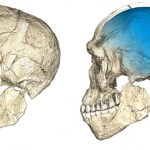
New finds of fossils and stone tools from the archaeological site of Jebel Irhoud, Morocco, push back the origins of our species by one hundred thousand years and show that by…
 oracknows | May 8, 2017
[Editorial update: I woke up this morning to find out that the answer to my question in the title is almost certainly yes. The post has been quickly altered to reflect that. See below.]
Believe it or not, I overlooked something in yesterday's post about a putrefying, rotting mess of a "vaccinated versus unvaccinated" study carried out by an Andrew Wakefield fanboi named Anthony Mawson that purported to have found that vaccinated children have a much higher prevalence of neurodevelopmental disorders (NDDs) and and diseases not preventable by vaccines than unvaccinated children. I'll refer you…
oracknows | May 3, 2017[Editor's note: Sorry this is a few hours late. I forgot to change the status from DRAFT to SCHEDULE in WordPress last night. D'oh!]
The single most persuasive strategies by which quacks sell their wares and believers in quackery persuade others to try the quackery they believe in is the personal anecdote. Indeed, I established very early on in the history of this blog a type of post that has become a staple that shows up several times a year. In these posts, I deconstruct "alternative cancer cure" testimonials, showing how the story as related doesn't provide convincing evidence that the…
 oracknows | April 18, 2017
If there's one thing about antivaxers, it's that they're single-minded beyond belief. No matter what the chronic health problem, it's always about the vaccines. To them, vaccines are always the cause. Autism? Vaccines must be the cause. Asthma? vaccines. Diabetes? Obviously vaccines. Sudden infant death syndrome (SIDS)? What else could it be but the vaccines? (Never mind that there's plenty of evidence suggesting that vaccinated children have a lower risk of SIDS.) That's how antivaxers think. Monomania doesn't even begin to describe it.
I was reminded of this yesterday when I came across yet…
 gregladen | March 24, 2017
You all know about this: It is being said that the OK sign is used to indicated "White Power" and this use has been spotted among politicians and celebrities everywhere. Is this real? I don't know. Is it a valid symbol for "White Power"? Certainly not.
The problem with the white power symbol is that it is not a symbol. Or, if it is a symbol, it is a baby symbol that doesn't know how to be a symbol yet, so don't expect much from it.
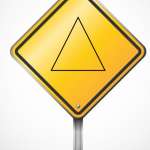
Semiotics Ahead Index (not an icon, not a symbol, but yes, it is a sign. With a sign on it.)
Try this.
Move your hands in front of you as though you were…