
Seed Media Group

transcription.jpg

Search this blog

Profile


me3.jpg
Alex Palazzo is a postdoctoral fellow working in the Department of Cell Biology at Harvard Medical School.

Recent Posts

Pure Biology Posts

Recent Comments

Archives

Links

The DNA 
Headlines

Extras

Locations of visitors to this page

Subscribe via Email

Stay abreast of your favorite bloggers' latest and greatest via e-mail, via a daily digest.

Sign me up!

August 18, 2008

MUST LISTEN: Robert Krulwich on Science for the Masses

Category: Science & Society

If you are a scientist, I urge you to listen to the commencement speech that Krulwich gave to the Cal Tech graduates earlier this year.

August 14, 2008

VADLO - Google for Scientists?

Category: Lab Life

Check it out.

ht: Dan @ BitesizeBio

August 12, 2008

On using "information processing" as a metaphor for biological processes

Category: Pure Biology

Sorry, I've been busy these past few days.

I want to respond to a comment posted by Dan and take this opportunity to broaden the discussion about how we use language to construct models.

Dan's concerns about information and life have been echoed by many out there, for example by John Wilkins. Can we use the term "information" when discussing life? Is there such a thing as "information"? Are these buzzwords without any deeper meaning?

What is lost in such an analysis is that all of our theories are infused with metaphors. These words and concepts help us to better understand the ideas and insights that may come out of any particular model. The metaphor of information and the use of similar terms in molecular biology (signal transduction, transmit, secondary messenger, genetic program, mRNA, transcription, translation, copying, amplification) help us to comprehend underlying biological processes. A certain sequence of base pairs is passed on from generation to generation, information. A cell secrets a growth factor and causes a nearby cell to differentiate, information.

Does information exist per say? Well I would like to argue that nothing exist in the exact way that any term implies, words after all are simply tools that help us to understand the world in which we live in. Some words are better than others, some less so. Some words give more insight because their meanings give insight when invoked in a particular context. You may choose to eliminate all the words for information in your explanation of biological processes and use instead another metaphor, that of machines for example, and you may gain some different insight, but let's face it, you will not be able to easily understand all the issues and questions that are implicit in the study of classical genetics. What is the unit of heredity? How is genetic information transmitted? Does genetic information have a physical counterpart? How is the sequence of bases along a strand of DNA converted into a sequence of amino acids? To say that information is a buzz word, or that it doesn't exist misses the point. It is a useful analogy. It's a metaphor that gives insight, just like the idea of molecular motors can promote the development of other forms of deeper understanding.

August 7, 2008

Want To Popularize Science? Here's the gadget for you!

Category: Science & Society

A pocket-size lensless microscope that uses on-chip optofluidic microscopy (OFM).

The sample is dragged in front of the detector and an image is extrapolated. Now imagine if every cell phone had one of these?

Ref:
Xiquan Cui, Lap Man Lee, Xin Heng, Weiwei Zhong, Paul W. Sternberg, Demetri Psaltis, and Changhuei Yang
Lensless high-resolution on-chip optofluidic microscopes for Caenorhabditis elegans and cell imaging
PNAS (08) 105:10670-10675

Update: someone just informed me of this interview of Changhuei Yang on NPR, click here to listen.

A way to break out of the pyramid scheme

Category: Lab Life

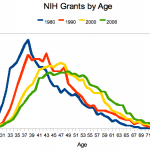
I was going to write something about the latest analysis of NIH funding in Science, but DrugMonkey did the work for me so go read his post. The bottom line is that NIH funding goes through boom-bust cycles that cause instability throughout the biomedical fields. In boom times the biomedical research fields recruit lots of grad students and postdocs (many of these recruits being foreign), after all the PIs need the work force and they now have funds to pay them. Then when these junior scientists go looking for their own lab and their first R01, the lack of funds forces many out of academia. To prevent this scenario from happening the NIH would need a 6% annual increase, which in all practical terms is impossible. Michael S. Teitelbaum calls this a "positive-feedback loop", but I tend to think of it as a pyramid scheme. And recently the NIH has been getting a whole lot less then a 6% increase - it's been flat. You can imagine the consequences.

August 5, 2008

Eye Candy - Nuclear Blebs

Category: Pure Biology


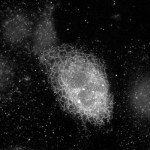
Here's an interesting micrograph of a nucleus lit up by fluorescent dextran. Besides the slightly darker areas (these are nucleoli - dense structures where ribosomes are manufactured), you'll note the small round blebs on the top of this dumbbell shaped nucleus. I run into cells like this once in a while, and I'm sure that others have seen similar nuclear morphologies, yet we still have no clue how such structures could form.

August 3, 2008

New Understanding of Biology

Category: Pure Biology

Two weeks ago, an interesting commentary by Paul Nurse, came out in Nature.

The bottom line? We need to change how we study and understand cellular signaling cascades.

First, some background. Cellular function is governed by a network of protein interactions that act like an information processing device. These devices sense external inputs, such as cell signaling factors, pH, nutrient availability and temperature, and they regulate a vast number of different cellular responses such as changes in morphology, alterations in the metabolic state, the modulation of cell division, or the regulation of cellular differentiation. These information processing devices are composed of bioactive molecules such as proteins and functional RNAs.

Traditionally these devices have been known as signaling cascades. In most papers and text books they are represented by flow charts. Molecule X activates molecule Y, molecule Y inhibits molecule Z, etc. Often one uses the metaphor of a river so that molecule Y is downstream from molecule X and upstream of Z. Sometimes small molecules such as cAMP or calcium spread the signal, other times its lipids, RNA but the main players are usually proteins. Within the pathway each player activates, inhibits or destroys the next in line. Sometimes the upstream molecule alters the localization of the next protein in the pathway, other times it modifies these downstream components by adding a small reactive group (e.g. a phosphate), a small peptide (e.g. ubiquitin), or by modulating some catalytic activity (e.g. activating GTP hydrolysis). Once in a while a molecule at the end of the pathway will alter the activity of molecules on the top of the cascade. These feedback loops give these signaling pathways a rheostat like ability. Other times the pathway may branch (molecule X activates molecules A, B and C), and other times the pathways converge. Some pathways "crosstalk" to other pathways so that signals that affect cell division also tweak signals that influence cell suicide. In addition the levels of each player can change. Gene expression and protein turnover thus play critical roles in determining how effective a signaling cascade can propagate or inhibit a signal. As a result, different cell types vary in their interpretation of any given signal. It's why a gut epithelial cell differs from a kidney epithelial cell.

But is this the best way to think of these signaling cascades? With the advent of big biology, we are discovering that most signaling proteins can influence the state of almost every other protein in the cell. Once we had a clear picture of signaling, but now our view resembles more and more a bowl of spaghetti. Naturally we must question whether all these putative links exist and whether they are important.

July 31, 2008

Waiting for updates ...

Category: art, food, music, citylife and other mental stimuli

My iPod has been a great addition to my life. I use it to listen to podcasts and audiobooks on my half-hour walks, to and from work. But recently two of my favorite items have gone into suspended animation.

July 28, 2008

Models, Ideologies and Self-Denial

Category: Science & Society

As a scientist, I traffic in data, ideas, models and theories.

I spend a lot of time thinking about how the whole process works. And many scientists and science philosophers have thought about this as well. One inescapable fact: humans tend to duck, deny and fool themselves into believing certain ideas even when data points the other way. It's the little voice in our head that says "I am not biased, it's everyone else." Humans are highly prone to much cognitive dissonance. It's just that in science you must confront this reality head on, all the time.

These tendencies exist everywhere and are held in check by institutional mechanisms. In the sciences and most of academia, this tendency is countered by our most treasured currency, trust. Scientists are known to be very skeptical individuals, this reflects the fact that in the scientific world trust must be earned. We all struggle in the lab to get results and generate theories that can advance the field we're in. These theories and models can then be tested further directly or indirectly. If your experiments are uncontrolled, unreliable, your results do not jive with other published results or your models have very little or no predictive power, you will never establish the trust that is required to succeed. The assessment of a particular scientist's reputation is aided by the many scientific institutions, such as publishers (who need to build up their own reputation), peer reviewers, tenure committees and a constant stream of new data from competing labs. Sometimes a mistake does happen (cold fusion being the best example), sometimes it's deliberate, sometimes it's sloppyness, but in the long run these problems are weeded out, science marches on. Within this framework most scientists learn to be careful with their experiments and their interpretations - after all their reputations are in play and the steady march of science doesn't give a damn.

In other arenas, such as in American political discourse, the cognitive dissonance that plagues human thought is rampant.

What is the difference between these two worlds? Why are they so different? Who is to blame?

A finger could be pointed at the main stream media (apparently now known as the traditional media). They have been seen as playing the role of public critic/skeptic and as the fact finder. However over the last eight years they've mostly played the role of stenographers and cheerleaders. Some may even claim that they've always played this second role - and to a certain extent they may be right. But it's definitely been worse in recent times.

Part of the problem is that those in position of influence within these institutions have forgotten how messy the human mind is. They forget that it is easy to fool yourself - the human mind easily gravitates towards ideas that are convenient. I guess there is no equivalent to the steady march of science. It seems to be all about short term profit and not long term reputation. And recently the whole situation in the MSM has been aggravated by the proliferation of political pundits. This is not only to forget the problems of ideology, but to fully embrace it.

Iraq is the enemy? They've must have helped Bin Laden. The schools are bad? Let the invisible hand of the free market magically fix things. You don't like the president's plan? You must be a traitor. These are simple thoughts that conveniently support the thinker's own inner bias. The pundits who spout these ideas are supposedly experts in every subject, but in the end are nothing but apparatchiks for the powers that be. These hacks are a case study in ideology-gone-wild.

Why did this happen?

July 27, 2008

Will data-euphoria kill scientific theory?

Category: Pure Biology

Now that I have a good chunk of time where I'm not scheduled to run off to some distant land for vacation or to give some talk, I have decided to work extra hard. Right now I'm incubating my samples. This post is the result of me killing that time.

I want to bring up an article that appeared n WIRED over a month ago. I know, that's ancient history in the world of blogs, but it's an idea that pops up once in a while and it is common in certain young naive scientists. Let me just quote a passage from the article:

This is a world where massive amounts of data and applied mathematics replace every other tool that might be brought to bear. Out with every theory of human behavior, from linguistics to sociology. Forget taxonomy, ontology, and psychology. Who knows why people do what they do? The point is they do it, and we can track and measure it with unprecedented fidelity. With enough data, the numbers speak for themselves.

The big target here isn't advertising, though. It's science.

....

But faced with massive data, this approach to science -- hypothesize, model, test -- is becoming obsolete.

And here is the part that I want to focus on:

In short, the more we learn about biology, the further we find ourselves from a model that can explain it.

There is now a better way. Petabytes allow us to say: "Correlation is enough." We can stop looking for models. We can analyze the data without hypotheses about what it might show. We can throw the numbers into the biggest computing clusters the world has ever seen and let statistical algorithms find patterns where science cannot.

OK this is just plain naive. Collects tons of random data and out pops ... what? Correlations? A Google search? Is this the advent of Deep Thought? If so, I'm afraid that the answer will be as meaningful as 42.

I think that the underlying problem with the whole concept of replacing the scientific establishment with a Google like data cruncher is that it misunderstand how scientific insight is achieved. I would like to point out two trends in the biological sciences that have produced this Google-induced data-euphoria.

July 23, 2008

Six Degrees of Scientific Separation

Category: Lab Life

I have a favour to ask of all of you. Go and fill in SciLink's Tree of Science (you'll have to sign up to SciLink first). Why? Well it is very interesting to see how different scientists are connected. And on top of that we can settle a longstanding dispute - what is the appropriate Erdos Number for biologists.

You might be asking, what is the Erdos Number? or who was Paul Erdos Number? From an old post by RPM:

Paul Erdos was an extremely prolific and mobile mathematician who has left a legacy in academia in the form of the Erdos Number -- a count of your "academic distance" from Erdos. Anyone who published a paper with Erdos has an Erdos number of one (Erdos, himself, had a number of zero), people who published with anyone with an Erdos number of one have an Erdos number of two, and so on. It's a point of pride for a mathematician or other researcher to have a small Erdos number.

But who exactly? As a cell biologist I would say that George Palade and Keith Porter would be a good start. Another possibility would be Watson and Crick. In any case to figure out the biology equivalent we would need some sort of repository, or even better some navigational network that lets you explore any possible connection. And now we have the perfect application.

SciLink%20copy.jpg

I must say that SciLink's Tree of Science is more of a Genealogical tree ... as in "X mentored Y" as opposed to "X coauthored a paper with Y". In fact some connections such as "coworkers" may not be represented in coauthorships. For example, I never published a paper with my coworker Bil, but we are connected in this tree by the fact that we were in the Rapoport lab at the same time. The opposite problem also occurs. For example, I coauthored a paper with Rich Vallee but according to the current version of the tree we are 4 degrees apart. Of course I could link us up directly ...

Here are some other interesting connections. I am
- 3 degrees away from Jeff Schatz (actually this should be 2)
- 3 degrees away from George Palade (although one connection is very small, my current postdoc advisor was a visiting scientist in Gunter Blobel's lab)
- 3 degrees of separation from Gary Borisy
- 3 degrees away from Peter Moore and 2 away from Venki Ramakrischnan (thanks Bil)

Let's take advantage of this user generated content filled application. Plus, it's a great way to kill time in between those long time points.

Dent, I've found you!

Category: Lab Life

If you are a postdoc or a junior faculty in the biomedical sciences, you have probably seen this infamous cartoon by Dent:

9_types_of_PIs.jpg

Yesterday I was talking with my good pal Dan and we were discussing a few other great pieces by Dent. After that conversation, I did what anyone else would do, I Googled the guy. Little did I know, I had just stumbled into a gold mine!

Here it is: http://dentcartoons.blogspot.com/

Proceed with caution.

July 22, 2008

The Trip Part V - Iceland

Category: art, food, music, citylife and other mental stimuli

We were planning to head to Europe so when I discovered that the cheapest tickets were being offered by Icelandair, I jumped on it. Why? I have always wanted to visit this mystic land and Icelandair lets you have a free stopover for up to a week. I highly recommend that you do this once - Iceland was far and away the highlight of our European trip.

Day I - We arrived late in Keflavik where the main international airport is located. This is on the southwest corner of the island and lies right on top of the mid Atlantic ridge in an area known as the Reykjanes. Already you can see that Iceland is not your everyday island. The area west and south of the town are essentially lava fields interrupted by bulges in the earth where gas, superheated water or lava periodically seeps out.

Slide0.jpg

Although Iceland is cold, I would say that the wind is much more impressive. Looking straight up you could clearly see the clouds zip across the sky. One moment it was sunny, the next rainy, the next foggy, and 5 minutes later the sun came out again. Another nice feature of the country is that it is loaded with geothermal energy sources. Ocean water seeps into cracks between the American and Eurasian plates as they move away from eachother. As the water hits the inner depts on the earth it heats up and boils up to the surface. This is very noticeable in the Reykjanes peninsula, which is full of power plants that convert the hot water into electricity. Another nice feature is that the ample amount of geothermal water means that you can find hot water at any location even the lowliest camp site!

We then arrived at our new home, Alex Camping/Hostel/Motel, a small place that is conveniently located 2 minutes away from the airport. After setting up the tent, we head inside to eat dinner and watch the Spaniards beat the Germans to take the Euro '08 final. Needless to say everyone was cheering for Spain. I should add here that we were able to catch quite a few games over the course of our trip. We saw Turkey make an incredible comeback to beat Croatia with two goals in the last few minutes. In Cancale Brittany we watched Italy beat France while surrounded by angry french partisans . We watched Germany beat Portugal with our Portuguese friends. And finally we watched Germany beat Turkey in Munich - now that was quite an experience! OK lets get back to Iceland ...

July 18, 2008

Yet another online site for scientific networking

Category: Lab Life

I've sign into yet another sciency LinkedIn type site. This time it's Epernicus. I've had a good look at the site, it's about on par with SciLink with some exceptions.

1) The scientific genealogy application on SciLink is much better then that on the Epernicus site. Why? You can extensively modify the tree beyond your own personal connections. Bigger trees are better (more info).

2) The profile page of Epernicus lists all your publications in chronological order - SciLink take note.

So by my quick score it's 1-1. I guess like every other epic battle (VHS vs. Beta, HD DVD vs. blu-ray and AC vs. DC) the winner will soon be acclaimed by popular demand.

July 17, 2008

Notes from Kindergarten

Category: Education

A friend of mine just sent this to me (for the record, he's a structure biologist, i.e. he studies the structure of proteins and other biological molecules):

My kid had a screen session with a school administrator for his kindergarten today. Following are some answers he came up with:

Teacher: "What is your favorite activity?"
Son: "Thinking."

He is probably right. He is always thinking of how to get his favorite food: rice krispies, candy...

Teacher: "What does your Daddy do?"
Son: "Work."
Teacher: "Where does you Daddy work?"
Son: "I don't know."
Teacher: "What's your Daddy's job?"
Son: "Structure."
Teacher: "Is your Daddy an instructor?"
Son: "No, structure."
Teacher: "Is your Daddy a builder?"
Son: "No, structure."

I usually took him from his day care to my lab and waited for his mom to pick us up. To keep him entertained, sometimes we sat in front of a computer, put on stereo-glasses and watched protein structures. We rotated the picture, zoomed in and out, put on different colors. My job: Rotate, zoom in and out of some funny shapes.

Teacher: "What does your mom teach?"
Son: "Students."

Good to know his mom does not teach monkeys.

July 16, 2008

Blogs in the Network

Advertisement

Top Five: Most Active

  1. What year is it, anyway? 08.20.2008 · PZ Myers
  2. Protecting the Right of Conscience? 08.20.2008 · PZMinion
  3. The Rick Warren Show 08.18.2008 · Ed Brayton
  4. Open Thread 12 08.19.2008 · Tim Lambert
  5. Women With Their Sexy Hawt Bodies: How's A Man To Look Away? 08.19.2008 · Zuska

Search All Blogs

Top Science Stories

powered by SEED - seedmagazine.com