
Policy

In a recent opinion piece in the Detroit Free Press, David Fukuzawa of the Kresge Foundation suggests that improving the performance of Detroit's public school children requires tackling lead poisoning. Federal and state funds to prevent lead poisoning have dropped, and the millions of dollars spent to improve Detroit schools "cannot succeed without improving the public health of the city's children, especially young children." Reducing lead exposure can be costly and complicated, but the payoff is worth it.
Even though the Consumer Product Safety Commission banned lead paint in 1978, housing…
 jdupuis |
On May 20th, 2013 I published my most popular post ever. It was The Canadian War on Science: A long, unexaggerated, devastating chronological indictment. In it, I chronicled at some considerable length the various anti-science measures by the current Canadian Conservative government. The chronological aspect was particularly interesting as you could see the ramping up since the 2011 election where the Conservatives won a majority government after two consecutive minority Conservative governments.
As an exercise in alt-metrics (and here), I thought I would share some of the reactions and…
The Supreme Court's decisions on marriage equality and the Voting Rights Act got a lot of media attention last week, but several of the Court's other decisions also have implications for public health -- and they came down on the side of employers, real-estate developers, and drug manufacturers.
In a Washington Post op-ed, Georgetown University law professor David Cole warns, "the underlying theme of the Supreme Court’s term was not the recognition of rights, but their dilution." He points to two cases involving employment discrimination:
In a pair of less-noticed decisions released the…
jdupuis |
After Your Job Is Gone
Disruptions: The Echo Chamber of Silicon Valley
MOOCs as a Lightning Rod
The Stories We Tell about MOOCs
Fixing the Digital Economy
Exit, Voice, and Loyalty in the Academic Library
Stop Scaring Students
An Avalanche is Coming: Higher education and the revolution ahead
Role of librarians changes in digital age
Exploring the future of academic libraries: A definitional approach
Why You Should Never Have Taken That Prestigious Internship
Notes From an Academic Nobody
What's a Library?
The End of Ownership
If you live in a surveillance state for long enough, you create a…
jdupuis |
I know I've already posted about the changes at the NRC, but this recent David Suzuki article frames the issue so perfectly that I thought I'd post about it again.
The article is called National Research Council's new focus ignores how science works. The core issue is that recently the Canadian Federal Government's National Research Council announced that it would change it's focus from performing basic, curiosity-driven research to more applied research, preferably sponsored by Canadian industry.
From Minister of State for Science and Technology Gary Goodyear's speaking points:
Ladies and…
by Kim Krisberg
It seems we barely go a week now without news of another violent gun incident. Last week's shooting rampage in Santa Monica, Calif., has resulted in the deaths of five people. And since the Newtown school shooting last December — in the span of less than six months — thousands of Americans have been killed by guns.
Just a couple days before the Santa Monica shooting, the Institute of Medicine (IoM) and National Research Council released a new report proposing priority research areas for better understanding gun-related violence, its causes, health effects and possible…
jdupuis |
Challenge, don't worship, the chiefs and high priestesses of science: If we don't recognise the politics of science, we will just get played by those who do
Confronting The Woo-Woos Head-On...
45% Fewer Professional Working Musicians Since 2002
Academics and universities must continue to develop open access alternatives to break the monopoly of large publishers
It’s not about predators, it’s about journal quality
Open Access Advocates Trumpet the Fall of the Paywall
Survivorship bias and electronic publishing: practically no one is making any money
The Challenges of Measuring Social Impact…
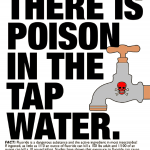

Chalk one up for the forces of anti-science, quackery, and pseudoscience. The citizens of Portland, Oregon just handed them a huge victory the other day when they once again rejected water fluoridation in a referendum:
Fluoride supporters, it appeared, had everything going for them.
Five Portland city commissioners had voted to add fluoride to the city water supply. Health advocacy groups, and many of the city's communities of color, lined up behind the cause. And proponents outraised opponents 3-to-1.
But none of that was enough. For the fourth time since 1956, Portlanders on Tuesday night…
sastyk |
From the Japan Times:
Former Irish President Mary Robinson’s foundation for climate justice is hosting a major conference in Dublin this week. Research presented there said that rising incomes and growth in the global population, expected to create 2 billion more mouths to feed by 2050, will drive food prices higher by 40 to 50 percent.
“We must prepare today for higher temperatures in all sectors,” said Gerald Nelson, a senior economist with the Washington-based International Food Policy Research Institute (IFPRI).
All of the studies suggest the worst impacts will be felt by the poorest…

And it may even be more when one considers that there is likely non-overlap between many of these conspiracies. It really is unfortunate that their isn't more social pushback against those that express conspiratorial views. Given both the historical and modern tendency of some conspiracy theories being used direct hate towards one group or another (scratch a 9/11 truther and guess what's underneath), and that they're basically an admission of one's own defective reasoning, why is it socially acceptable to espouse conspiracy theories? They add nothing to discussion, and instead hijack…

According to data from U.S. Customs and Border Protection (CBP), 477 individuals died along the U.S.-Mexico border in 2012 during their attempt to enter the U.S. That's an all-time high rate of 13.3 deaths per 10,000 CBP apprehensions. It compares to a rate of 8 deaths per 10,000 in 2010, and 4 per 10,000 in 2005.
The data was assembled by the National Foundation for American Policy (NFAP) in the policy brief "How many more deaths? The moral case for a temporary worker program." At a time when fewer migrants are attempting to enter the U.S. illegally, the author…
Helen Epstein has an interesting review of Lead Wars: The Politics of Science and the Fate of America’s Children by Gerald Markowitz and David Rosner, in the current New York Review of Books. The review is worth reading to better understand the public policy problem of lead in products and the environment. But I cannot help but point out that the article could be used to provide more footnotes to the Denialists' Deck of Cards:
... The lead companies also paid scientists who produced flawed studies casting doubt on the link between lead exposure and child health problems. When University of…
I'm not a big fan of Cancer Treatment Centers of America (CTCA). That I don't much like CTCA should come as no surprise, given that this particular hospital chain distinguishes itself from other hospital chains by advertising its full body embrace of quackery, in particular "naturopathic oncology." At the same time as it's advertising its "integrative cancer care." It all sounds great on the surface, but anyone who understands exactly what "integrative medicine" is and how it basically represents the evolution of quackery will also understand that when you "integrate" quackery and…
jdupuis |
(This post supersedes the previous post listing items related to the Aaron Swartz story. That post was from January 20, 2013.)
A few comments.
Aaron Swartz's story has had a huge impact, it has reverberated far and wide not just through the interlinking worlds of technology and online activism but far into the mainstream. The library world has been no exception, with quite a few of the items below being from our world.
How has the library world reacted? If anything, I would hope that we have been challenged to examine our core values very carefully, to reflect deeply about how we make…

For starters, I've put a bunch of videos including a must see by Jon Steward and another must see by Melissa Harris-Perry HERE. Following is a veritable carnival of topical and timely posts, stories, and sites:
Warning shot: Gun violence lands US lowest life expectancy among rich nations
Widespread gun ownership and lax firearms controls were deemed major reasons for the US topping a list of violent deaths in wealthy nations. The study comes amid a fiery gun control debate, triggered by the fatal school shooting at Sandy Elementary.
The 378-page survey by a panel of experts from the…
jdupuis |
The recent death of Aaron Swartz has provoked a lot of commentary on the web so I thought I would gather some of it here. This is by no means an attempt to be comprehensive as the amount of commentary has been truly vast. I've tried to gather enough so that someone working through even a small selection of the posts would get a good idea of all the dimensions of the story. I've also tried to perhaps give a bit of a library/academia slant in the selection.
As usual with these compilations, readers should feel free to suggest further readings in the comments especially those that add a…

I was curious to see what kind of defense Matt would put on against my suggestion of additional regulations to address the problem of gun violence and homicide in the US, and I was a bit disappointed to see that the response is largely a "no problem" argument. I had actually come into this debate thinking that both of us at least acknowledge that the US has a problem with gun homicide, but it appears as though I'll have to backtrack a bit. So, starting with the "no problem" argument, I will describe why it is bogus, why the US does have a problem with firearm homicides (I can't believe that…
Given that Matt and I are both gun enthusiasts, scientists, and bloggers, and we're both interested in something being done to prevent mass shootings such as in Newtown, Aurora, and almost one dozen other locations in just the last few years, we decided to host a more formal debate on the issue. I'm taking the side of a more stringent policy specifically on certain types of firearms that I don't believe should be freely-available to citizens, that is, magazine-fed semi-automatic handguns and rifles. This doesn't mean I believe in a ban, but simply more barriers to purchase, and simple safety…

And by "Prestigious" I mean .... well, see for yourself in this story from Media Matters for America (Reposted with permission):
Climate Change Misinformer Of The Year: Marc Morano
ClimateDepot.com founder Marc Morano has been called "the Matt Drudge of climate denial," the "king of the skeptics," and "a central cell of the climate-denial machine," and he revels in these descriptions. Although he has no scientific expertise, he is adamant that manmade global warming is a "con job" based on "subprime science." Morano gained prominence working for two of the most vocal climate deniers in the U.…
 drorzel |
As I'm sure you wish you hadn't heard, there was another school shooting in Connecticut on Friday, one that was hellishly awful even by the standards of such things. The Internet, of course, instantly exploded with the depressingly predictable standard response. And it's hard to put into words just how depressing it is that there's a standard response to this-- The Onion pretty well nailed it back in July, but amazingly, they managed to do it again this time.
I shut social media down for most of the day-- and, anyway, I was home with a sick SteelyKid-- but the usual flamewar was still in full…