Advertisment
Home

Main navigation

  • Life Sciences
  • Physical Sciences
  • Environment
  • Social Sciences
  • Education
  • Policy
  • Medicine
  • Brain & Behavior
  • Technology
  • Free Thought
  1. grrlscientist
  2. English Elm Tree

English Elm Tree

  • email
  • facebook
  • linkedin
  • X
  • reddit
  • print
Profile picture for user grrlscientist
By grrlscientist on July 6, 2008.

tags: English Elm Tree, Ulmus procera, tree bark, Image of the Day

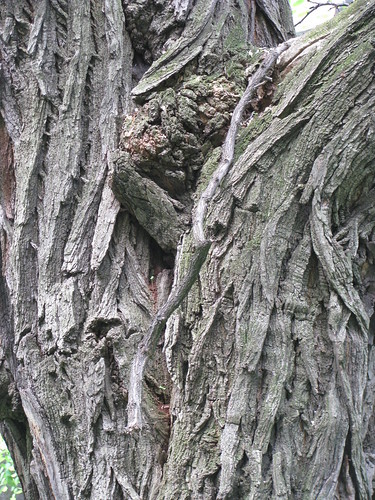
Bark of the English elm tree, Ulmus procera.

Image: GrrlScientist 2008 [larger view].

Tags
image of the day
my pictures
Photography
English elm tree
tree bark
Ulmus procera
image of the day
my pictures
Photography

More like this
Advertisment

Donate

ScienceBlogs is where scientists communicate directly with the public. We are part of Science 2.0, a science education nonprofit operating under Section 501(c)(3) of the Internal Revenue Code. Please make a tax-deductible donation if you value independent science communication, collaboration, participation, and open access.

You can also shop using Amazon Smile and though you pay nothing more we get a tiny something.


Science 2.0

Science Codex

  • The Hidden Burnout Crisis Facing SEO Social Media Marketers
  • Everyone Pays The Cost for Patents on Seeds
  • Everyone Pays The Cost for Patents on Seeds

More by this author

Big News: This Blog Has Migrated to a New Home
September 1, 2010
As one of the initial recruits to Scienceblogs, my years and effort invested into Scienceblogs have been worthwhile. Since I relocated my original blog, Living the Scientific Life, to Scienceblogs in early January 2006, it received more than 6 million visits and nearly 30,000 comments, it helped…
ScienceBlogs = ZombieBlogs
July 20, 2010
Unless you've been living under a rock, or you are the CEO of Seed Media Group (SMG), you are well aware that Bora Zivkovic left ScienceBlogs 24 hours ago. Shockingly, despite this important loss, Adam Bly, CEO of SMG, has not communicated with any of us who remain at ScienceBlogs about this loss…
Mystery Bird: Magnificent Frigatebird, Fregata magnificens
July 20, 2010
tags: Magnificent Frigatebird, Man O'War, Fregata magnificens, birds, mystery bird, bird ID quiz [Mystery bird] Magnificent Frigatebird, sometimes known as the Man O'War, Fregata magnificens, photographed at Quintana Neotropical Bird Sanctuary, Brazoria County, Texas. [I will identify this bird…
Scientia Pro Publica (Science for the People) #35 is Published!
July 20, 2010
Nam et ipsa scientia potestas est (And thus knowledge itself is power) -- Sir Francis Bacon. The most recent edition of Scientia Pro Publica (Science for the People) -- "Scientia Pro Publica 35" -- was just published at the buttcrack of dawn today by John at Kind of Curious. To share yours,…
The Secret Powers of Time
July 20, 2010
tags: The Secret Powers of Time, time, hedonism, future orientation, education, personality type, popular psychology, society, culture, lucifer effect, teenage pregnancy, Philip Zimbardo, Royal Society of Art, RSA, streaming video In this video animation, Professor Philip Zimbardo conveys how our…

More reads

Saturn's hexagon brings new, colorful mysteries (Synopsis)
“Cassini is different -- it's a mission of enormous scope and is being conducted in grand style. It is much more sophisticated than Voyager, ... I can't say it's got that flavor of romance, though. Voyager was very romantic. Cassini is spectacular.” -Carolyn Porco It was a big enough mystery when Saturn’s hexagon was first discovered by going back to archival Voyager data, and then confirmed by…
Dark Energy: Gaining a Foothold (Part 2)
Last time, we talked about the discovery of dark energy. How did it happen? Well, there are certain kinds of Supernovae, type Ia supernovae, that are practically identical to one another all across the Universe. In fact, we had one happen in our own galaxy in 1572; it outshone everything besides the Moon in the night sky for weeks. How do type Ia supernovae work? Many solar systems out there are…
I am not a number
I endorse this article: 5 Ways That Science Supports Feminism – Not Gender Essentialism. It's making the point that when you actually study the relevant sciences, you discover that they fundamentally support a more complex view of sexuality than the usual boy/girl dichotomy. Here, in brief, are the five points it makes: 1. There Are More Than Two Sexes, Not to Mention a Vast Range of Gender…

© 2006-2026 Science 2.0. All rights reserved. Privacy statement. ScienceBlogs is a registered trademark of Science 2.0, a science media nonprofit operating under Section 501(c)(3) of the Internal Revenue Code. Contributions are fully tax-deductible.
