

 esiegel |
“You are the salt of the earth. But remember that salt is useful when in association, but useless in isolation.” -Israelmore Ayivor
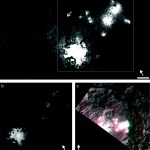
When NASA's Dawn spacecraft began photographing Ceres, one big surprise emerged: the presence of a spectacularly and unusually bright spot at the bottom of Occator crater. As we got closer, we discovered it was a series of spots in the lowlands of the crater bed, and that there were other suspicious, smaller bright spots elsewhere on the surface.
Image credit: NASA/JPL-Caltech/UCLA/MPS/DLR/IDA, converted from Nature Publishing Group press’s YouTube channel.…
 esiegel |
"We cannot be vengeful. We need to find pono [righteous] solutions. We need to find good things for astronomers. Cooperation is, I think, really the true part of our human nature, not competition. I think we have to go back to cooperation to survive the future." -Kealoha Pisciotta, president of Mauna Kea Anaina Hou
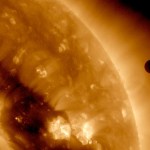
If you want to explore the Universe, you need a telescope with good light gathering power, a high-quality camera to make the most out of each photon, and a superior observing location, complete with dark skies, clear nights, and still, high-altitude air. There are only a few…
 esiegel |
"Mars is much closer to the characteristics of Earth. It has a fall, winter, summer and spring. North Pole, South Pole, mountains and lots of ice. No one is going to live on Venus; no one is going to live on Jupiter." -Buzz Aldrin
When we think about life in the Universe, we think about Earth-like conditions: a hospitable atmosphere devoid of poison, flowing water and the right temperatures and pressures for liquid on the surface, and just the right distance from the parent star to make it all happen. But perhaps life exists in abundance under very different conditions: in the atmospheres of…
 esiegel |
"It will be found that those contained in one article [class of nebulae], are so closely allied to those in the next, that there is perhaps not so much difference between them, if I may use the comparison, as there would be in an annual description of the human figure, were it given from the birth of a child till he comes to be a man in his prime." -William Herschel
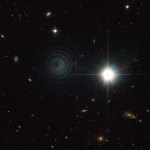
When a star like the Sun nears the end of its life, a few things are inevitable: nuclear fusion in its core will cease, the outer layers will be blown off, and a white dwarf and planetary nebula will be the result. But this…
 esiegel |
“Every moment of light and dark is a miracle.” -Walt Whitman
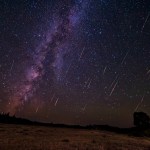
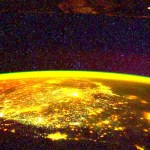
Every once in a while, the Earth hurtles through the orbital path of a comet or asteroid, with the Sun having torn tiny bits of debris from the parent body. As a result, the Earth strikes these dusty fragments at speeds often exceeding a hundred thousand miles-per-hour, resulting in a tremendous light show: meteor showers!
Image credit: NASA / public domain, of the Leonid meteor shower (1997) as seen from space.
Most people wind up disappointed in meteor showers for two reasons: they don't know what to expect and they don't…
 esiegel |
“Pluto was part of their mental landscape, the one they had constructed to organize their thinking about the solar system and their own place within it. Pluto seemed like the edge of existence. Ripping Pluto out of that landscape caused what felt like an inconceivably empty hole.” -Mike Brown
We had an awfully busy week here on Starts With A Bang, with a number of fun and challenging posts:
Can two planets share the same orbit? (for Ask Ethan),
Year in Space vs. Space views from Hubble calendars,
Ceres' permanent shadows may house relics from the infant solar system (for…
 esiegel |
"Maybe that is our mistake: maybe there are no particle positions and velocities, but only waves. It is just that we try to fit the waves to our preconceived ideas of positions and velocities. The resulting mismatch is the cause of the apparent unpredictability." -Stephen Hawking
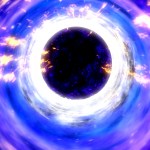
Black holes are the densest, most compact objects in the Universe, with anywhere from a few to many billions of solar masses of material concentrated into a singularity. At a certain distance away from that singularity, every black hole has an event horizon: a region of space from within which nothing can escape, not…
 esiegel |
"We've learned that the view of four inner rocky planets and four outer gas giants and one misfit Pluto is wrong. Now we understand Pluto's context." -Alan Stern
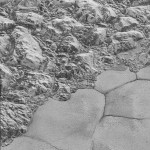
After a 9 year journey to Pluto, NASA's New Horizons spacecraft made its closest approach to Pluto this past July, taking so much data that it will take a full 16 months to send it all back. The first of the highest resolution photos ever taken were released by NASA earlier today.
Image credit: NASA/JHUAPL/SwRI.
Even though the data has yet to be scientifically analyzed, a visual inspection teaches us a number of things about…
 esiegel |
"The two most common elements in the universe are hydrogen and stupidity." -Harlan Ellison
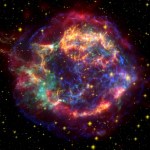
Shortly after the Big Bang, the Universe was filled with 99.99999993% hydrogen and helium, with the rest being lithium. But stars change everything, by fusing those elements -- the lightest ones -- into heavier ones, climbing the periodic table and enriching the Universe with its contents.
Image credit: NASA / JPL-Caltech.
After billions of years of star formation and nuclear fusion, a new 3rd most common element has emerged, and it isn’t carbon — formed from helium fusion — which only clocks in at…
 esiegel |
"After 20 years of exploring planets as big as Jupiter around other suns, we still have a lot of questions left open. For instance, we don’t understand what is the physical mechanism that forms Jupiter-like planets with orbital periods as little as a few days." -Alexandre Santerne
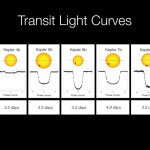
By surveying an area of the sky containing over 150,000 stars visible to it, the Kepler satellite monitored each one over a multi-year period looking for periodic changes in brightness. Thousands of planetary candidates emerged via the transit method, where periodic dips of 3% or less were noted with regularity.…
 esiegel |
"A dwarf standing on the shoulders of a giant may see farther than a giant himself." -Robert Burton
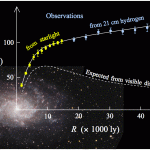
Both the internal motions of individual galaxies and the wholesale motions of galaxies within clusters require much more mass than normal matter — protons, neutrons and electrons — can account for: about five times as much. Because this can't be any of the Standard Model particles, and it can't interact either electromagnetically or with the nuclear forces, we refer to it as dark matter.
Image credit: Wikimedia Commons user Stefania.deluca.
But oddly enough, the smallest galaxies exhibit…
 esiegel |
"Lots of science fiction deals with distant times and places. Intrepid prospectors in the Asteroid Belt. Interstellar epics. Galactic empires. Trips to the remote past or future." -Edward M. Lerner
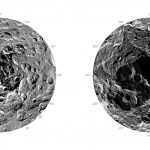
Of all the asteroids we've ever discovered, it's arguably the very first one, Ceres, that's got the most to teach us. Currently being mapped at higher and higher resolution by NASA's Dawn Spacecraft, Ceres isn't just the largest asteroid we've got, it's also one of the least inclined, orbiting the Sun with a tilt of just 3 degrees.
Image credit: NASA / JPL-Caltech / UCLA / MPS / DLR / IDA, from…
 esiegel |
"No one regards what is before his feet; we all gaze at the stars." -Quintus Ennius
For the space, science or astronomy enthusiast, there's nothing like looking up at the Universe with your own eyes and discovering it. But during the day, while you're seated at your desk, office or computer, many of us crave connecting with the Universe then, even if briefly, even if only for a moment. And there are many, many wall calendar options out there for you to choose from.
Image credit: The Scientific American Space: Views From The Hubble Space Telescope 2016 calendar.
But despite the…
 esiegel |
“At times our own light goes out and is rekindled by a spark from another person. Each of us has cause to think with deep gratitude of those who have lighted the flame within us.” -Albert Schweitzer
It was an action-packed week here at Starts With A Bang, where we took on all of the following:
How do black holes make such bright quasars? (for Ask Ethan),
No, ISS astronaut Scott Kelly did not take a picture of a UFO,
Dark matter's secrets revealed by colliding galaxy clusters (for Mostly Mute Monday),
Strange but true: dark matter grows hairs around stars and planets,
How…
 esiegel |
"We are not like the social insects. They have only the one way of doing things and they will do it forever, coded for that way. We are coded differently, not just for binary choices, go or no-go. We can go four ways at once, depending on how the air feels: go, no-go, but also maybe, plus what the hell let's give it a try." -Lewis Thomas
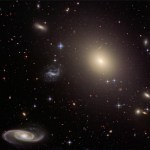
One of the most important characteristics of a planet, at least according to the IAU definition, is that it clear its orbit of all other bodies. But if we allowed for a special caveat -- the possibility of two similarly-sized objects sharing the same orbit…
 esiegel |
“We live in an atmosphere of shame. We are ashamed of everything that is real about us; ashamed of ourselves, of our relatives, of our incomes, of our accents, of our opinions, of our experience, just as we are ashamed of our naked skins.” –George Bernard Shaw
On this Thanksgiving day, we're supposed to express gratitude for all that we have in this world: for the friendships, families, and the bounty of good things that have come our way. We also give thanks for all the serendipity we've been lucky enough to encounter, including what the natural world gives us for free.
Image credit: public…
 esiegel |
"Learn from yesterday, live for today, hope for tomorrow. The important thing is not to stop questioning." -Albert Einstein
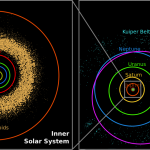
While it's easy to look on Einstein's general theory of relativity — which turns 100 today — as a revolutionary new way to interpret space and time, as well as their interplay with matter and energy, it actually came about due to a problem with the Solar System.
Image credit: NASA / JPL-Caltech / R. Hurt.
The orbits of all the planets, comets and asteroids were explained very nicely by Newtonian gravity, with the exception of Mercury, which precessed a little too…
 esiegel |
"Few enterprises of great labor or hazard would be undertaken if we had not the power of magnifying the advantages we expect from them." -Samuel Johnson
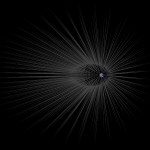
Dark matter may make up 27% of the Universe's energy density, compared to just 5% of normal (atomic) matter, but in our Solar System, it's notoriously sparse. In particular, there's just a nanogram's worth per cubic kilometer, which makes the fact that we've never directly detected it seem inevitable.
Image credit: J. Cooley, Phys.Dark Univ. 4 (2014) 92-97, via http://inspirehep.net/record/1322880.
But recent work has demonstrated that…
 esiegel |
"It may be that ultimately the search for dark matter will turn out to be the most expensive and largest null result experiment since the Michelson-Morley experiment, which failed to detect the ether." -John Moffat
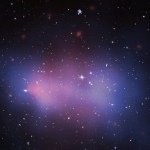
Dark matter is a puzzle that's now more than 80 years old: the presence of all the known, observable, detectable normal matter -- the stuff in the standard model -- cannot account for the gravitation of the astronomical objects we observe. But despite our inability to create or detect it in a laboratory, we're certain of its existence in the Universe.
Image credit: X-ray: NASA/CXC…
 esiegel |
"It's almost like I feel I'm just moving there, and I'm not coming back." -Scott Kelly
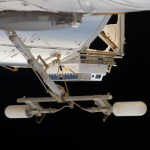
On his 233rd day in space, ISS astronaut Scott Kelly took a photo that's since gone viral of the Earth at night, showing a number of cities in India and a star field above the planet's atmosphere and airglow.
Image credit: ISS astronaut Scott Kelly, via https://twitter.com/StationCDRKelly/status/666042034633883649/photo/1?r….
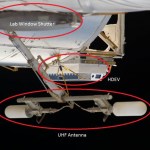
But in the upper right of the photo, a Star Destroyer-esque light looms. As I explain, however, this is simply light reflecting off of the ISS's HDEV module, nothing more…